A, B, C are reference stars, bright enough for their (x, y) positions to be measured in the images. Get their known RA and Dec and measure their (x, y) positions in one of the images, after the images have been aligned (so the positions are the same in all of them). Try to choose stars forming a triangle around the expected comet position.
The lower 2 rows are for the predicted RA and Dec of the moving object at the start and end times of the sequence. These rows will be completed by the "Calculate" button. The calculation involves finding the transformation from (RA, Dec) on a star chart to (x, y) in any of the images. The first step is to make a small star chart in a plane tangential to the celestial sphere at the comet's starting position. A small chart is displayed to confirm that that is working. That then enables a Helmert transformation to be done, to the image plane.
Probably the easiest way to set the data up is to load them from a CSV file. CSV means Comma Separated Values, as plain text. There must be 21 separated values to match the editable cells in the table, reading left to right and then down. Spreadsheets can save CSV files or they can be created in a plain text editor such as Notepad.
To get predicted RA and Dec of a comet at particular times you could use my own Solar System Positions, another free browser application.
The (x, y) positions of the reference stars in any of the aligned images can be measured accurately using GRIP. Open one of the images and on its Segmentation menu select Auto-segment (stars). Then click on each of the reference stars to see its measurements in a pop-up window. Note that in computer images y is measured from the top down. The AstroFreeze calculator takes that into account.
The buttons to save and load the table in your browser use local storage. The project name is only used to index such saved data. No data are sent to the server and no cookies are used.
A new version of GRIP, v26.11.6, is now available and there is a full description of the comet stacking process here (PDF file)
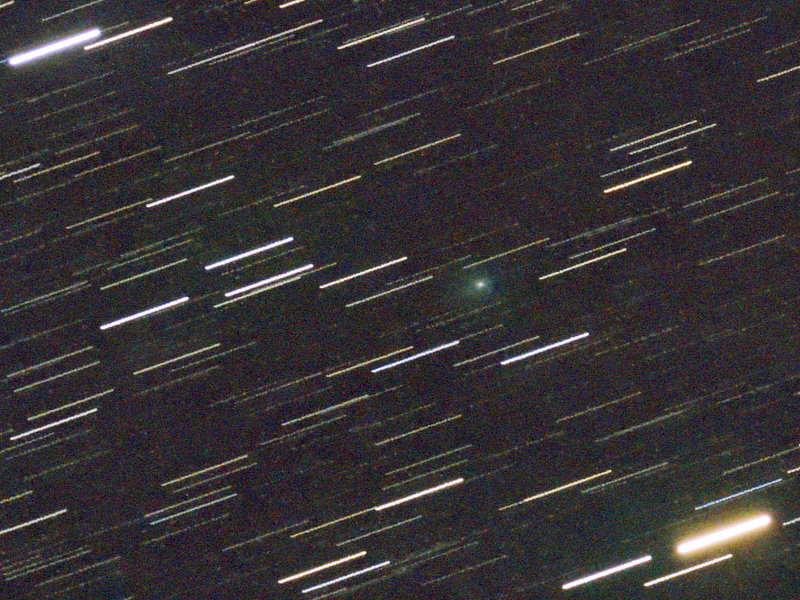
Comet 161P/Hartley-IRAS captured with Seestar S30 Pro 2026 Oct 1 21:12:14-22:35:37 UTC
Processed using GRIP and AstroFreeze with some enhancement in AstroWizard
Back to Contents page